Tracking Transportation Emissions
How many miles do you drive each year?
How many miles do you fly each year?
For most of us ‘Transportation Emissions’ represent the largest portion of our carbon footprint. Yet, most of us have no idea how much we fly or drive which means we have no idea what our carbon emissions are from transportation.
Tracking miles traveled is the first step in meeting our 10% emission reduction goal. We need that baseline information to get started. Yes, it takes some effort, but the planet is worth it!
Gas Powered Vehicles
Step 1) Vehicle Miles Traveled (VMT)
I have been tracking how many miles I drive each year for the last 40 years. I simply record the odometer reading of my car each year on Jan 1. I subtract last years reading from this years reading to get my annual miles traveled. If I want a daily average I divide my annual mileage by 365.
Example: Jan 1, 2025 my odometer reading was 83000. On Jan 1 2026 my odometer read 94047. The difference was 11,047 miles. My daily average is then 11,047 / 365 or 30.2 miles/day.
But you don't have to wait for a year to learn how much you drive. You can track weekly or monthly mileage and use that estimate to get to your annual baseline mileage. Simply set your trip odometer to zero, note the date, and start driving. After 14 days or a month, check your odometer again. This gives the miles traveled in x amount of days. Multiply this value by 365 to get your annual mileage.
Once you have your annual or daily VMT multiply that number by 0.90 to get your target mileage. For me, that would be 11,047 miles/year x 0.9 = 9942 miles per year. Daily it would be 30.2 x 0.9 = 27.1 miles per day.
Step 2) Vehicle Efficiency (MPG)
To calculate the actual emission reductions you need to know the efficiency of your vehicle (miles per gallon).
There are several options for doing this. Here are two of them.
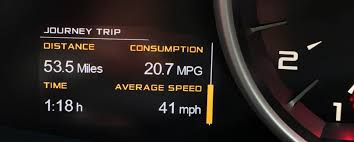
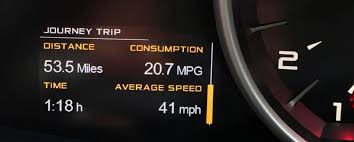
Option 1: Most newer cars have a miles per gallon listed on the dashboard or somewhere in the dashboard setting. These give you historic miles per gallon and the miles per gallon on your current trip. It is best to use the historic average, not 'trip' average as trip mpg is quite variable.
Option 2: If you have an older car without the consumption reported you will need to do this. Fill your car with gas. Set your trip odometer to zero. Drive until you are down to 1/4 tank or less. Fill up your car again with gas and note the miles on your trip odometer and the gallons of gasoline you used. Divide the miles by the gallons to get mpg.
Example: If you filled your tank with gas with an odometer reading of 93,000 miles and then filled it again with an odometer reading of 93,200 and it took 10 gallons of gas to fill your tank the math would be: 93,200 miles -93,000 miles)/10 gallons = 20 miles per gallon.
Step 3) Calculating Carbon Emissions:
To calculate the carbon emissions from your vehicle divide the miles traveled per day by the mpg to get the average gallons of gasoline used per day
Example: 30.2 miles per day / 20 mpg = 1.51 gallons of gasoline per day
To determine the CO2 emissions from the burning of this gasoline, multiply the gallons per day by 8.8 kg CO2/gallon to get the kg of carbon dioxide emissions per day.
Example: 1.37 x 8.8 = 12.1 kg CO2 emissions per day
Reducing our vehicle emissions by 10% means we have to either reduce the amount we drive by 10% or improve our gas mileage (mpg) by 10%. There are many ways to do this that we will cover in other tutorials.
Electric Vehicles
If you drive an electric vehicle (EV) you have already cut your vehicle emissions by 50% or more. Congratulations! EV's are just that much more efficient. But that doesn't mean you can't reduce your vehicle emissions by 10%.
The first step is tracking how much you drive in a year. This is the same as with gasoline powered vehicles (see above).
To determine your vehicle efficiency, or miles/kwh, your EV has a dashboard view with that information.
Once you have your annual mileage and vehicle efficiency you can calculate the carbon emissions from driving.
Example: If you drive 30.2 miles per day and your vehicle efficiency is 3.25 miles/kWh the math becomes: 30.2 mpd/3.25 miles/kWh = 9.29 kWh per day
To determine the CO2 emissions from production of the electricity you used, multiply the kWh per day by 0.346 kg CO2/kWh to get the kg of carbon dioxide emissions per day.
Example 9.29 kWh/day x 0.346 kg CO2/kWh = 3.21 kg CO2 emissions per day.
If the calculations are hard for you send me a note and I can help you.

Flying
Flying can be a signficant contributor to our carbon emissions. Every mile we travel on a plane emits 0.17 kg CO2 per mile. Therefore, to calculate our emissions from flying, multiply your miles traveled per year by 0.17 kg CO2/mile to get kg CO2/year from flying.
The first step is to track how much plane mileage we do in a year. Yes, this can be quite variable from year to year, but take your best shot. It is likely that you remember the trips you took but knowing the mileage from those trips will require some effort. The easiest way to find the mileage is to use this flight carbon emissions calculator from the International Civil Aviation Organization. It is add free and provides both flying distance and the resulting emissions from both national and international flights.
Busses and Trains
If you are walking, biking, bussing or traveling by train your carbon emissions from these activities is close to zero. Congrats. You are doing the right thing.