Everything Matters
Some Things Matter More
1/25/20263 min read
2.0 changes
This could also be titled Meaningful steps
Everything matters
3 big things - starting points. Vehicles. Home heat and AC, Diet
Quantification
Commit 10%
To be climate Responsible do I really need to unplug my phone charger and not use plastic bags?
Do I need to worry about how I heat my water for my tea? Should I use hot water from my tap or start with cold water for that tea?
Should I reduce my thermostat setting in the winter?
Should I switch to an electric vehicle?
All of these things are important and add up to real impacts. Saving toothpaste matters! But often the question is what are the three things I can do to really cut my carbon.
For most of us, our biggest single emission comes from driving our cars. However, if you fly alot, travel could be your biggest. Or, if you own more than one home, that second home can really add to your emissions.
There is no single path to meaningful carbon reductions. All of our stories are different.
Residential Energy
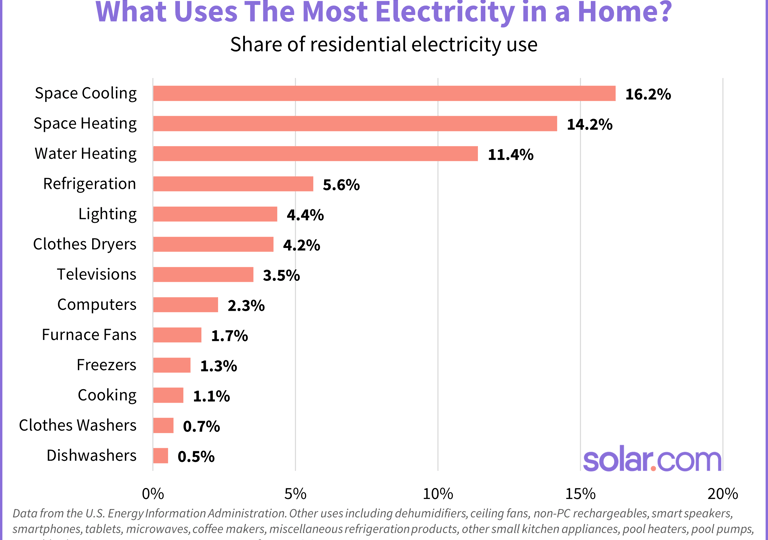
A quick look at residential energy use suggests that space heating, water heating, and space cooling are the top three energy users in a home. This means that if we want to reduce our energy/emissions, we need to focus our attention first on those three items. Changing your thermostat settings just a couple of degrees for a few hours a day can make a difference. A 24 hour change of 1 degree results in a 5% energy savings. This is a NO COST carbon reduction!
But you will notice that things like iPhones and TVs don't even make the list. Most of our electricity use falls into the "Other" category.
This means that Everything Matters - we need to pay attention to small things as well as big things, but our first focus should be on the big things.
As per our 10% reduction commitment, the low hanging fruit is likely changing your thermostat setting, or unplugging your extra refrigerator. Here are some other NO COST things to consider:
Unplugging that beer fridge may be a sacrifice, but if you don't need it it would save you about 2 kWh per day or about 0.7 kg per day or 250 kg per year.
Adjust your Thermostat: Just one degree up or down can be 5% of your energy use.
Room fan: Leaving it on for a full 24 hours is about 1 kWh or about 5% of typical daily energy use.
Space Heater: A space heater can be using 1 kWh per hour of operation. Leave it on all day and it is likely the biggest energy user in your home!
Decorative Lighting: Fairy lights or outdoor lighting can really add up. Do you need them? Can you use them less?
The best way to know what matters is to start measuring. Purchase a simple kilowatt hour meter, about $15, and plug it in to your devices to find out how much they use. You will find that iphone chargers and laptop chargers don't need to be unplugged.
If you have a few dollars to commit to energy reductions, purchase a whole home energy monitoring system (~$300). This will monitor all your electric circuits so you can see the big energy users. Yes, it takes time. The planet is worth it!
Driving Cars
For most of us, transportation is our biggest source of emissions. About 25 miles in a car (1 gallon of gas) is equivalent to the energy use of a typical home in a day (25 kwh). Each of these activities emits about 9 kg of carbon dioxide!
Flying in a Plane
Driving 1000 miles in a car emits about 360 kg of carbon dioxide. (CO2e). Flying 1000 miles in a plane emits about 180 kg of carbon dioxide (CO2e) (more for shorter flights, less for longer flights). Yep. about half. Flying roundtrip from the Las Angels to New York racks up about 5000 miles or about 600 kg of carbon dioxide (ICAO). If we divide this single trip emissions by 365 days in a year, our trip added on about 1.6 kg CO2e per day to our emissions.


Consumption.
Diet